
Aluminum fence installation typically takes one to two days for most residential properties. It involves five main phases: consultation and planning, site preparation, post installation, panel attachment, and final inspection. Professional aluminum fence contractors near you will handle everything from obtaining permits to cleaning up after the job is complete. The process is straightforward, efficient, and causes minimal disruption to your daily routine.
Understanding what happens during installation helps you prepare your property and set realistic expectations. Whether you're adding an aluminum privacy fence for backyard seclusion or installing decorative fencing around your pool, knowing the process makes the experience smoother for everyone involved.
As a trusted aluminum fence company in Jacksonville, Top Fence LLC provides robust installation and quality materials that help homeowners enjoy long-lasting security and style for decades. Jacksonville homeowners choose aluminum fencing for its durability, low maintenance requirements, and attractive appearance. Aluminum fences can last 30 to 50 years with proper installation, making them an excellent long-term investment for your property.
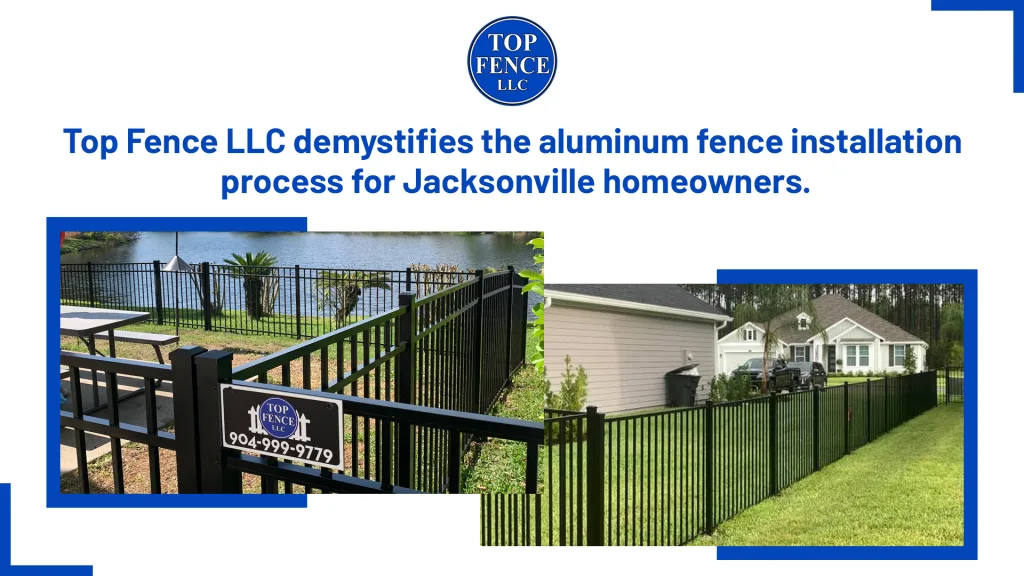
Most residential aluminum fence installations are completed in one to two days. Metal fences, such as aluminum, typically require 2 to 4 days to complete, with straightforward projects on the shorter end of that timeline.
Several factors influence installation duration. Property size matters most. A small backyard fence goes up faster than fencing an entire acre. Terrain also plays a role. Flat yards allow quicker work than sloped or rocky ground. Gate installations add time, as do custom features like decorative caps or special designs.
Weather conditions can affect the schedule, too. Rain delays concrete work, while extreme heat or cold may slow progress. An experienced aluminum fence company in Jacksonville plans around these factors to minimize delays and keep your project on track.
Proper preparation helps in a smooth, efficient installation. Your aluminum fence contractors nearby will handle most tasks, but homeowners can help the process along.
Confirm your exact property boundaries before installation begins. Review your property survey or hire a surveyor if needed. Installing a fence on your neighbor's property creates legal problems and expensive corrections later. Most disputes arise from unclear boundaries, so verification protects everyone involved.
Call 811 at least two days before installation to mark underground utilities. This free service identifies electric lines, gas pipes, water mains, and communication cables. Professional installers won't dig until utilities are marked. This critical safety step prevents dangerous accidents and costly damage.
Many Jacksonville neighborhoods require permits for fence installation. Your aluminum fence company in Jacksonville typically handles permit applications as part of its service. They know local codes, height restrictions, and setback requirements. Homeowners' associations may have additional rules about fence styles and colors.
Remove obstacles from the fence line before installation day. Move outdoor furniture, planters, and decorations. Trim overhanging branches that might interfere with work. Clear away toys, equipment, and anything else in the work area. This preparation lets installers work efficiently without stopping to move items.
Plan to keep pets and children away from the installation area. Construction sites pose safety risks with tools, materials, and open post holes. Arrange for pets to stay indoors or in a separate area. The noise and activity may stress animals, so a quiet space helps them stay calm.
Professional installation follows a systematic approach that provides quality results. Here's what happens at each phase.
Installation begins with careful planning. Contractors measure the area precisely and mark post locations using stakes and string. This layout creates a straight, level fence line that looks professional when complete.
The string line serves as a reference point throughout installation. Posts are positioned slightly away from the string without touching it. This technique prevents the fence from appearing wavy or crooked. Every measurement matters at this stage because corrections become difficult once posts are set.
Digging post holes requires precision. Holes typically measure six inches in diameter and reach 30 to 42 inches deep, depending on frost lines and local codes. Deeper holes in colder climates prevent frost heave from pushing posts upward during winter.
Professional installers use power augers that dig quickly and consistently. Manual digging works for small projects but takes much longer. Rocky soil or tree roots may require extra time and specialized equipment. Proper hole depth provides stability, especially during Florida's storm season when high winds test fence strength.
Setting posts correctly makes or breaks fence quality. Each post goes into its hole with careful attention to alignment and height. Installers use levels so that posts stand perfectly vertical. Even slight tilting creates visible problems once panels attach.
Quick-setting concrete secures posts in place. The mixture fills the hole around each post, creating a solid foundation. Installers shape the concrete surface to slope away from posts, directing water drainage. Posts must remain level while concrete sets, so regular checking prevents shifting.
Concrete needs 24 to 48 hours to cure fully. Rushing this step compromises fence stability - professional contractors schedule work to allow proper curing time between phases.
Once posts cure, panel installation moves quickly. Aluminum fence panels slide into pre-punched holes in the posts. This design makes assembly straightforward compared to building fences from individual pickets.
Each panel fits between two posts with rails inserted into post openings. Installers secure connections with screws, creating rigid joints that won't separate. They check alignment constantly, confirming panels stay level across the entire fence line.
Corner posts and end posts require special attention. These critical points need extra support because they anchor the fence structure. Gate posts receive reinforcement to handle the stress of daily opening and closing.
Gates completes the installation. Hinges attach to posts first, positioned precisely for smooth operation. The gate hangs in the opening with careful measurement to provide proper clearance. Self-closing hinges get tension adjustments for the right swing speed.
Latches install according to your preferences. Basic latches work for most applications, while lockable versions provide extra security. Installers test gates multiple times, making adjustments until the operation feels smooth and reliable.
Post caps add the finishing touch. These decorative elements protect post tops from water intrusion while enhancing appearance. Contractors clean the site, removing all debris, excess concrete, and materials. Your yard looks neat and ready to enjoy.
| Phase | Duration | Key Activities | What You'll Notice |
| Consultation & Planning | 1–2 hours | Measurements, design selection, permit discussion | Contractor walking property, taking notes |
| Site Preparation | 2–4 hours | Marking utilities, clearing the area, and staking the layout | Stakes and string marking the fence line |
| Post Installation | 4–6 hours | Digging holes, setting posts, pouring concrete | Holes being dug, posts going up |
| Concrete Curing | 24–48 hours | Waiting for posts to set properly | Posts standing, no activity |
| Panel & Gate Install | 3–5 hours | Attaching panels, hanging gates, and final adjustments | The fence is taking shape quickly |
| Category | Items Needed | Purpose |
| Excavation | Power auger, post hole digger, shovel | Digging precise post holes |
| Leveling | 4-foot level, string line, stakes | Providing straight, plumb installation |
| Fastening | Drill, screwdriver bits, screws | Securing panels and hardware |
| Materials | Posts, panels, gates, and concrete mix | Building a complete fence system |
| Safety | Gloves, safety glasses, utility markers | Protecting workers and utilities |
Hiring experienced aluminum fence contractors delivers better results than DIY installation. Professionals bring specialized tools that make work faster and more accurate. Power augers dig consistent holes in minutes. Laser levels provide perfect alignment. These tools are expensive to buy for a single project.
Experience matters too. Professional installers handle challenges that stop DIY projects cold. Rocky soil, sloped terrain, and tight corners require problem-solving skills developed over the years. They know how to adjust techniques for Jacksonville's sandy soil and high water tables.
Warranty protection provides peace of mind. Top Fence LLC backs installations with satisfaction guarantees. If problems arise, professional contractors fix them. DIY mistakes become expensive lessons without this safety net.
Time savings make professional installation attractive. What takes homeowners an entire weekend gets done in a day or two. You avoid the physical strain of digging holes and lifting heavy materials. Let professionals handle the hard work while you focus on other priorities.
Aluminum fencing requires minimal maintenance compared to wood or iron alternatives. This easy upkeep contributes to aluminum's popularity among busy homeowners.
Clean your fence once or twice yearly using mild soap and water. A garden hose removes most dirt and debris. For stubborn stains, scrub gently with a soft brush. Avoid abrasive cleaners that scratch the powder-coated finish. Keeping your fence clean prevents buildup that dulls its appearance.
Jacksonville's weather brings strong storms, especially during hurricane season. Walk your fence line after severe weather to check for damage. Look for loose posts, bent panels, or missing screws. Small problems fixed quickly prevent bigger repairs later. Contact professionals for aluminum fence repair in Jacksonville when you notice issues beyond simple tightening.
Gates get more use than fence sections, so they need extra attention. Check hinges periodically for looseness. Tighten screws that work freely from regular opening and closing. Lubricate moving parts annually to maintain smooth operation. Test latches to confirm they catch properly and provide security.
Keep plants trimmed away from your fence. Vines and shrubs pressing against panels can cause scratches or stains. Tree branches rubbing in the wind create wear spots over time. Maintaining clearance around your fence preserves its appearance and prevents damage.
Aluminum fencing offers advantages that make it ideal for Northeast Florida. The material resists corrosion, even in coastal areas where salt air attacks other metals. Jacksonville Beach and Ponte Vedra residents benefit from this rust-proof quality.
Hurricane resistance gives aluminum fencing an edge. Properly installed aluminum fences withstand high winds without the brittleness of vinyl or the weight that makes chain link vulnerable. The material flexes slightly under stress, then returns to shape once the winds subside.
Low maintenance requirements save time and money over the fence's lifespan. No painting, staining, or sealing needed. The powder-coated finish protects against fading and weathering. This durability makes aluminum fencing cost-effective despite a higher initial investment than some alternatives.
Aesthetic versatility lets aluminum fencing complement any architectural style. Choose from traditional picket designs, privacy panels, or ornamental patterns. Colors range from classic black and white to bronze and green. Whether you prefer modern minimalism or classical elegance, aluminum fencing adapts to your vision.
Ready to enhance your property with durable, attractive aluminum fencing?
Top Fence LLC delivers skilled aluminum fence installation throughout Jacksonville and the surrounding areas. Since 2018, we've helped homeowners create beautiful, secure boundaries with professional craftsmanship backed by our satisfaction guarantee.
Our experienced team understands Jacksonville's unique installation challenges, from sandy soil conditions to hurricane preparation requirements. We handle everything from permit applications to final cleanup, making the process easy for you.
Call (904) 999-9779 today for your free estimate. Top Fence LLC proudly serves St Johns County, Jacksonville Beach, Palm Coast, Nocatee, Fruit Cove, Palm Valley, Lakeside, St Augustine, Ponte Vedra, Middleburg, Green Cove Springs, Yulee, and nearby areas.
Military discount available. Explore our complete aluminum fencing solutions designed for Florida's climate. Compare options with our residential fencing services to find the perfect solution for your property.
Your satisfaction is guaranteed.


