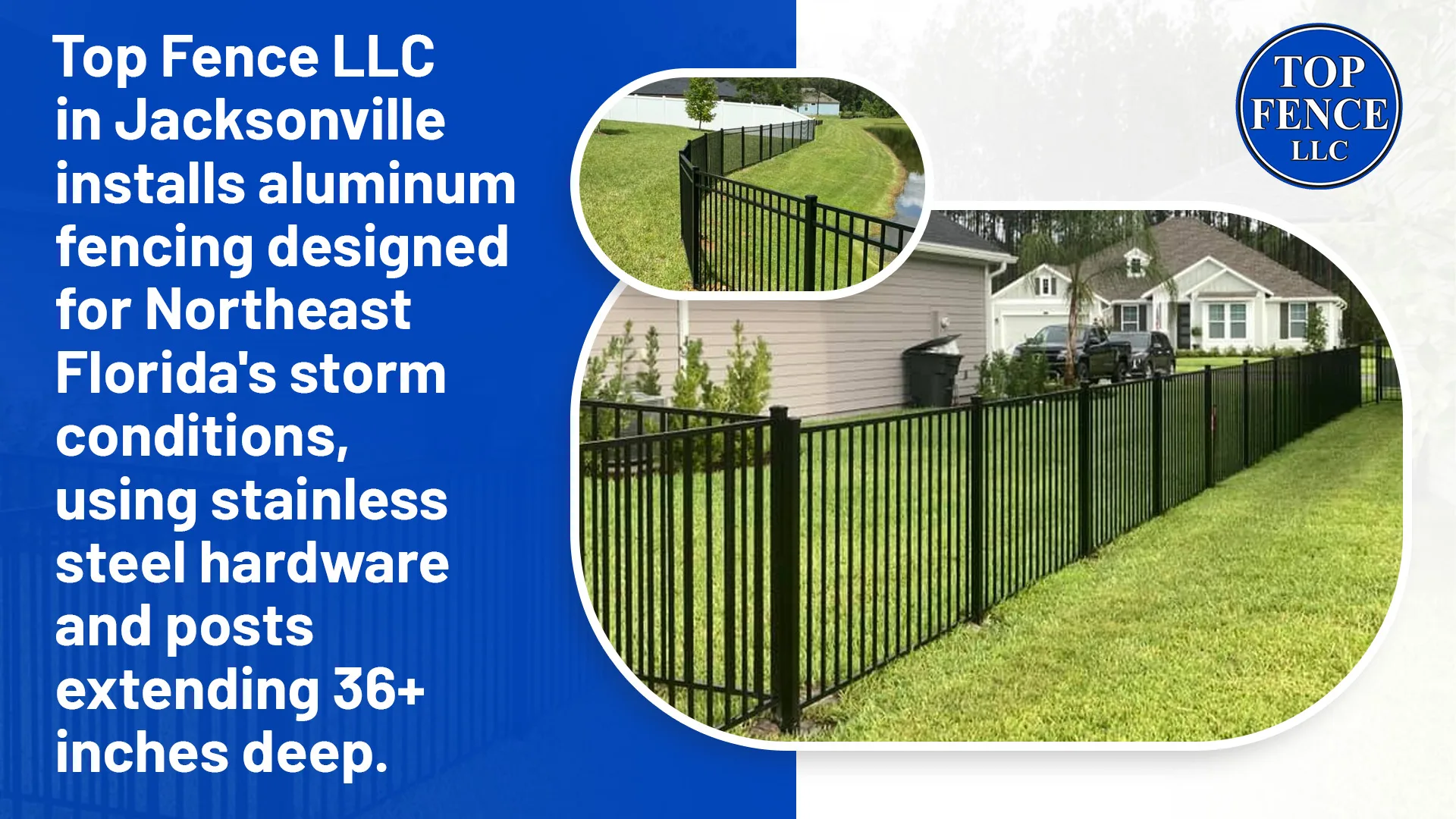
Aluminum fences can withstand moderate hurricane winds when properly installed, but their performance depends on design, installation quality, and reinforcement. Open picket-style aluminum fencing performs better than solid panels because wind passes through the gaps, while reinforced systems with deep posts and concrete foundations can handle winds up to 160 mph in some configurations.
At Top Fence LLC, a leading aluminum fence company in Jacksonville, we understand the unique challenges local homeowners face during hurricane season. Living in Jacksonville means preparing your property every year for potential storms, and when you invest in fencing, it is important to know how different materials handle extreme weather. Aluminum fencing offers many advantages for Florida homeowners, but its hurricane resistance depends on several key factors, including the quality of aluminum fence installation and the reinforcement techniques used.
According to industry research, Jacksonville has experienced multiple hurricanes since 1930, with Hurricane Dora making direct landfall as a Category 2 storm in 1964. This history makes hurricane-resistant fencing essential for protecting Northeast Florida properties.
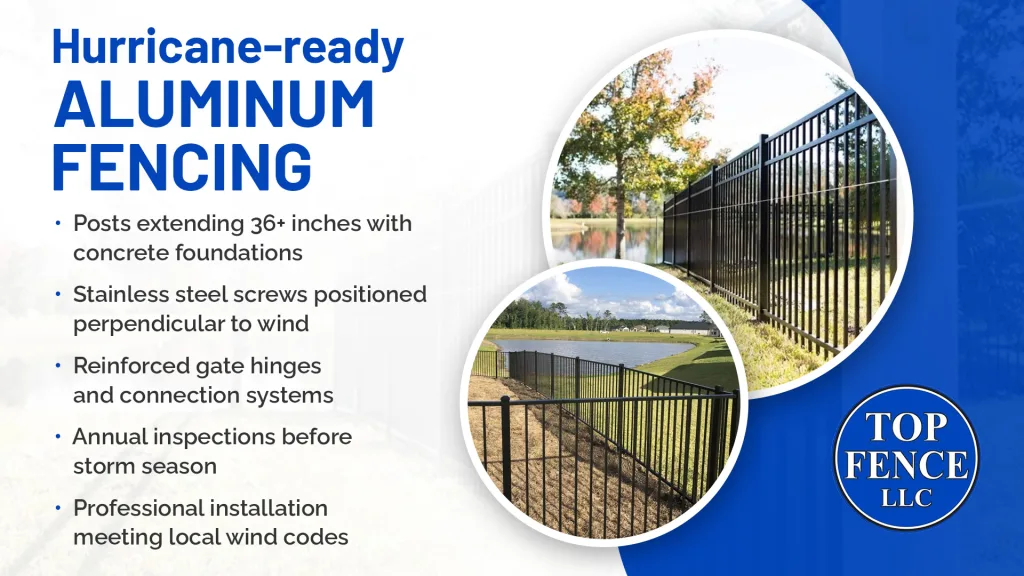
Proper aluminum fence installation with deep posts and concrete foundations makes the critical difference between fences that survive hurricanes and those that fail during Category 2 or stronger storms.
Open-picket aluminum designs outperform solid panels in hurricane winds by allowing air to pass through gaps rather than catching maximum wind force like aluminum privacy fence panels that act as sails.
Working with experienced aluminum fence contractors near you helps confirm that your fence meets Jacksonville's wind load requirements and incorporates reinforcement techniques specific to coastal hurricane zones.
Reinforced aluminum systems engineered for hurricane conditions can withstand winds up to 160 mph, significantly exceeding the performance of standard residential fencing materials.
Regular maintenance and timely aluminum fence repair in Jacksonville help prevent small issues from turning into major structural failures. Even minor damage can reduce hurricane resistance, making it important to choose a qualified aluminum fence company in Jacksonville.
The Saffir-Simpson Hurricane Wind Scale categorizes hurricanes from 1 to 5 based on sustained wind speeds. Category 1 hurricanes bring winds from 74 to 95 mph, while Category 5 storms exceed 157 mph. According to the National Hurricane Center, hurricanes rated Category 3 and higher are considered major hurricanes capable of causing devastating wind damage.
Jacksonville typically experiences Category 1 and 2 hurricanes, though stronger storms occasionally impact the area. Hurricane Matthew in 2016 passed just 37 miles east with 110 mph winds, while Hurricane Irma in 2017 caused historic flooding. Understanding these wind speeds helps homeowners select appropriate fencing materials and installation methods.
Even Category 1 hurricanes create substantial forces against fences. Wind pressure increases exponentially with speed, meaning a 100 mph wind exerts four times more force than a 50 mph wind. This relationship explains why proper fence design and installation matter significantly in hurricane zones.
Aluminum fencing possesses unique characteristics that affect hurricane performance. The material combines lightweight properties with surprising strength, creating both advantages and challenges during extreme weather events.
Aluminum fencing features an impressive strength-to-weight ratio. The material requires approximately 38,000 pounds per square inch of pressure to permanently deform, making it resistant to normal impacts. This strength allows aluminum to flex under wind pressure rather than breaking like wood or cracking like vinyl.
The lightweight nature means less mass for winds to push against compared to solid wood fencing. However, this same characteristic can become problematic if posts and foundations lack adequate depth and reinforcement. Proper aluminum fence installation requires attention to anchoring systems that prevent the entire fence from lifting during high winds.
Traditional aluminum picket fencing performs better in hurricanes than solid panels. The spaces between pickets allow wind to pass through rather than creating solid barriers that catch maximum wind force. This semi-open design reduces overall pressure on fence posts and foundations.
According to research on wind-resistant fencing, open designs like aluminum picket fences experience significantly less wind loading than solid privacy fences. The gaps disperse wind energy instead of blocking it, reducing the likelihood of fence failure during storms.
An aluminum fence company in Jacksonville, familiar with hurricane conditions, understands the importance of picket spacing and panel design. Wider spacing between pickets improves wind resistance but reduces privacy. Finding the right balance depends on your property's specific needs and exposure to prevailing winds.
Aluminum develops a natural oxide layer when exposed to air, creating protection against rust and corrosion. This characteristic proves especially valuable in Jacksonville's coastal environment, where salt spray accelerates metal deterioration.
Unlike steel fencing that requires protective coatings to prevent rust, aluminum maintains structural integrity even after hurricane exposure to saltwater and rain. This durability helps your fence remain strong through multiple storm seasons without the weakening effects of corrosion.
Several critical factors determine whether your aluminum fence survives hurricane winds intact. Understanding these elements helps you make informed decisions during installation and maintenance.
Deep, properly anchored posts form the foundation of hurricane-resistant fencing. Posts should extend at least 36 inches into the ground, with deeper installation recommended for taller fences or areas with softer soil. Many fence failures occur because inadequate post depth allows winds to lift or lean fences despite intact panels.
Concrete foundations around each post provide essential stability. The concrete should extend below the frost line and surround the post completely, creating solid anchors that resist uplift forces. Some installations use steel inserts within aluminum posts to increase strength at critical connection points.
Working with experienced aluminum fence contractors near you, such as Top Fence LLC, provides proper foundation preparation. Our professionals understand Jacksonville's soil conditions and know how to adapt installation techniques for maximum wind resistance.
Solid aluminum privacy panels face different challenges than open picket designs. While solid panels provide maximum privacy, they catch significantly more wind, requiring additional reinforcement to survive hurricanes.
Reinforced ribbing in privacy panels adds structural strength without significantly increasing weight. Some manufacturers design panels specifically for hurricane zones, incorporating features like interlocking connections and reinforced rails that distribute wind loads more effectively.
The spacing and thickness of horizontal rails also affect panel strength. More rails positioned closer together create stronger panels that resist bending under wind pressure. Quality aluminum fencing uses rails thick enough to support the vertical pickets without flexing.
Hurricane-resistant fencing requires hardware designed to withstand extreme forces. Stainless steel screws positioned perpendicular to fence lines could reduce wind exposure compared to screws parallel to prevailing winds. This seemingly minor detail can prevent bracket failures that lead to complete fence collapse.
Gate hinges and latches demand special attention. Gates experience tremendous forces during hurricanes as winds attempt to push them open or tear them from posts. Heavy-duty hinges with multiple mounting points and secure latches prevent gate failure that can compromise entire fence sections.
Some systems use hurricane straps or clips at panel connections to prevent separation during storms. These reinforcements cost more initially but can save thousands in repair expenses after hurricanes.
Understanding how aluminum performs relative to other materials helps homeowners make informed choices for hurricane-prone properties.
Wood fencing faces significant challenges in hurricane winds. Solid wood privacy fences act as sails, catching maximum wind force and frequently failing during Category 2 or stronger storms. Wood also absorbs moisture, weakening structural integrity over time.
According to wind resistance research, wood fences typically withstand winds up to 60 mph before experiencing damage. In contrast, properly designed aluminum fencing can handle significantly higher wind speeds. Wood requires regular maintenance, including staining and sealing, to maintain strength, while aluminum needs minimal upkeep.
The weight difference between materials affects installation requirements. Wood's heavier mass requires stronger posts and foundations, even for moderate height fences. Aluminum's lighter weight allows for easier installation while still providing adequate strength when properly reinforced.
Vinyl fencing offers some hurricane advantages through flexibility that allows panels to bend under wind pressure. Research suggests vinyl fences can withstand winds up to 70 - 80 mph when properly installed. However, vinyl becomes brittle in cold weather and can crack under impact from flying debris.
Both aluminum and vinyl resist corrosion better than wood or steel. Vinyl requires no painting, and aluminum needs minimal maintenance, making both good choices for busy homeowners. The key difference lies in impact resistance: aluminum dents but rarely breaks, while vinyl can shatter when struck by hurricane debris.
Solid vinyl privacy panels face similar wind resistance challenges as solid aluminum panels. The choice between materials often depends on aesthetic preferences and specific property requirements rather than purely on hurricane performance.
Chain link fencing provides excellent hurricane resistance through its extremely open design. Wind passes freely through chain link with minimal resistance, making these fences among the most hurricane-proof options available. However, chain link lacks the privacy and aesthetic appeal that many homeowners desire.
Aluminum picket fencing offers a middle ground, providing better appearance than chain link while maintaining good wind resistance through a semi-open design. For properties where appearance matters alongside hurricane protection, aluminum presents a more attractive option.
The wind speeds that aluminum fences can withstand vary significantly based on design and installation quality. Understanding these limits helps set realistic expectations for hurricane performance.
Traditional aluminum picket fences with proper installation typically handle winds from 80 to 110 mph before experiencing damage. These fences feature open designs that allow substantial wind passage while maintaining structural integrity. The picket spacing and post depth primarily determine performance limits.
Failures in this wind range usually involve post movement rather than panel damage. When posts lift or lean, even intact panels become compromised. This emphasizes the critical importance of deep foundations and concrete anchoring for Jacksonville properties.
Specialized aluminum fencing systems designed for hurricane zones can withstand significantly higher wind speeds. Some manufacturers engineer products rated for winds up to 160 mph through features like reinforced ribbing, steel post inserts, and enhanced connection systems.
These reinforced systems cost more than standard fencing but provide peace of mind in hurricane-prone areas. The investment often pays for itself by eliminating repair costs after major storms. Insurance companies sometimes offer discounts for hurricane-rated fencing, partially offsetting the initial expense.
Solid aluminum panels face greater challenges in hurricane winds due to increased surface area catching wind. Even with reinforcement, solid panels typically have lower wind ratings than open designs.
An aluminum privacy fence requires extra attention to post depth and spacing. Posts should be positioned closer together than with picket fencing, and concrete foundations must extend deeper. Some installations incorporate diagonal bracing or additional support posts to handle the increased wind loads.
Proactive steps before hurricane season significantly improve your fence's chances of survival. These preparations combine proper installation with ongoing maintenance.
Annual inspections before hurricane season identify potential weaknesses. Check all posts for movement by pushing firmly at the top. Any looseness indicates foundation problems requiring immediate attention. Tighten all screws and bolts, replacing any corroded hardware.
Examine gate hinges and latches carefully. Gates often fail first during hurricanes, and a damaged gate can compromise adjacent fence sections. Replace worn hinges before storm season and make sure latches engage securely.
Look for any damaged or bent pickets. Even minor damage can worsen rapidly under hurricane winds. Aluminum fence repair in Jacksonville should be completed well before storm threats emerge.
Clear vegetation and debris from around your fence before hurricanes. Fallen branches can damage even strong aluminum fencing, and accumulated debris increases wind loading. Trim tree branches that hang over or near the fence to prevent them from falling during storms.
Remove any items stored against the fence. Trash cans, lawn equipment, and furniture can become projectiles during hurricanes, damaging your fence and creating dangerous flying debris. Secure or store these items indoors when storms approach.
When hurricane warnings are issued, some homeowners add temporary bracing to vulnerable fence sections. Diagonal supports from posts to the ground can help prevent leaning, though this requires preparation and time.
Gates should be secured in closed positions with additional locks or chains. The goal is to prevent gates from swinging violently during the storm, which can tear hinges from posts.
After hurricanes pass, assessing damage determines whether repair or replacement makes more sense economically and structurally.
Minor dents and bent pickets often can be repaired without replacing entire sections. Aluminum's flexibility allows some straightening, though severely kinked metal should be replaced. Individual pickets are relatively easy to remove and replace without disturbing entire panels.
Loose posts that have shifted but not broken can sometimes be reset and reinforced. This requires excavating around the post, repositioning it correctly, and adding fresh concrete. The success of this repair depends on soil conditions and the extent of foundation damage.
Gate damage frequently involves just hinges or latches rather than the gate itself. Replacing hardware restores function while preserving the existing gate structure.
Severely bent or twisted panels generally require replacement. While aluminum resists breaking, extreme deformation can compromise structural integrity even if the fence still stands. Continuing to use severely damaged panels risks complete failure in future storms.
Posts that have cracked, broken, or pulled completely from the ground need replacement. Trying to reuse damaged posts creates weak points that will fail again. Complete fence sections should be replaced when multiple posts have failed.
Storm surge exposure can compromise fence foundations even when visible damage seems minimal. If your fence experienced flooding, have aluminum fence contractors near you assess foundation integrity before assuming everything is fine.
Several manufacturers produce aluminum fencing specifically engineered for hurricane conditions. These systems incorporate design features that maximize wind resistance.
Hurricane-rated aluminum fencing uses thicker materials, reinforced connections, and specialized mounting systems. Steel inserts within aluminum posts add strength at critical stress points. Interlocking panel systems distribute wind loads more effectively than traditional bracket mounting.
Some systems include adjustable brackets that allow panels to move slightly under extreme winds rather than transferring all force to post connections. This controlled flex prevents catastrophic failures while maintaining overall fence integrity.
Products approved by Miami-Dade County building codes meet stringent wind resistance requirements. These approvals indicate testing verification for hurricane conditions. While Jacksonville's building codes differ from Miami-Dade's, these certifications provide confidence in extreme weather performance.
Look for fences rated to handle sustained winds of 140 mph or higher. This rating exceeds most hurricanes likely to impact Jacksonville, providing a safety margin for unexpected storm intensity.
Jacksonville and the surrounding areas have specific building codes for fence installation. These codes address setbacks, height limits, and in some cases, wind resistance requirements. Working with an aluminum fence company in Jacksonville familiar with local codes helps your installation meet all requirements.
Some HOAs mandate specific fence styles or materials. Review your community's rules before selecting aluminum fencing to avoid compliance issues. Many HOAs approve aluminum due to its attractive appearance and durability.
| Hurricane Category | Wind Speed (mph) | Aluminum Fence Type | Expected Performance |
| Category 1 | 74–95 | Standard Picket | Minimal to no damage |
| Category 1 | 74–95 | Solid Panel | Minor damage possible |
| Category 2 | 96–110 | Standard Picket | Minor damage, possible post movement |
| Category 2 | 96–110 | Solid Panel | Moderate damage likely |
| Category 2 | 96–110 | Reinforced System | Minimal damage |
| Category 3 | 111–129 | Standard Picket | Significant damage expected |
| Category 3 | 111–129 | Reinforced System | Moderate damage possible |
| Category 4 | 130–156 | Reinforced System | Significant damage likely |
| Category 5 | 157+ | All Types | Catastrophic damage expected |
At Top Fence LLC, we plan every aluminum fence installation in Jacksonville to match local wind conditions, combining durable materials and reinforced designs that protect properties through multiple storm seasons.
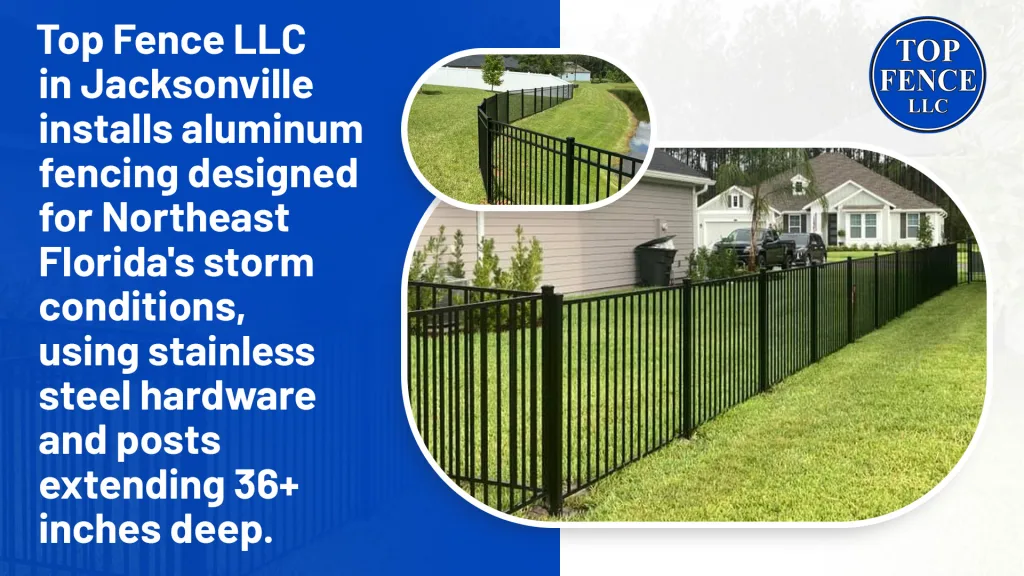
Aluminum fencing provides reasonable hurricane protection when properly designed and installed. The open picket style offers the best wind resistance, while solid panels require additional reinforcement for hurricane zones.
Top Fence LLC specializes in aluminum fence installation designed for Northeast Florida's hurricane conditions. Our experienced team understands the unique challenges Jacksonville properties face and implements installation techniques that maximize wind resistance. Every installation considers prevailing wind directions and property-specific exposure factors.
Don't wait until hurricane season to address fence concerns. Proper installation and maintenance protect your investment and prevent dangerous fence failures during storms.
Call (904) 999-9779 for your free estimate on hurricane-resistant aluminum fencing. Our team provides experienced guidance on design options, reinforcement strategies, and maintenance practices that keep your fence secure through hurricane season.
Top Fence LLC proudly serves Jacksonville, Jacksonville Beach, St. Augustine, Ponte Vedra, Palm Coast, St. Johns County, and surrounding Northeast Florida communities with professional aluminum fence installation backed by our satisfaction guarantee.


