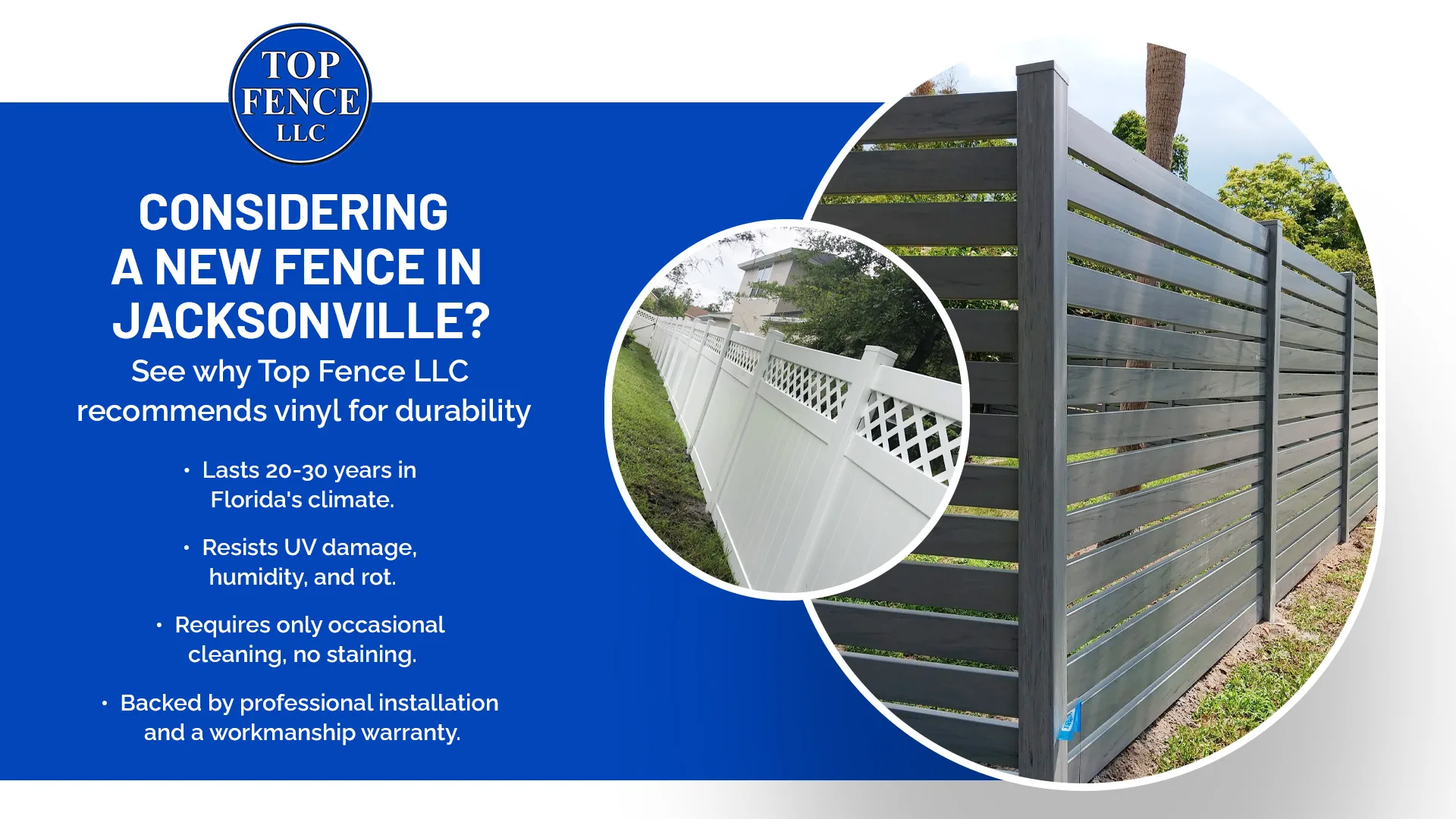
A vinyl fence in Florida typically lasts 20 to 30 years with proper installation and care. High-quality vinyl fencing with UV protection can even exceed this range, providing decades of reliable service. According to the International Association of Certified Home Inspectors, vinyl fencing can last 100 years or more under ideal conditions. In Florida's challenging climate, proper material selection and professional installation become even more important to reach this longevity potential.
Vinyl fences outlast many other materials in Florida's environment. Wood fences need replacement after 10 to 15 years, while vinyl keeps performing. The secret lies in the material itself. Polyvinyl chloride (PVC) doesn't rot, warp, or attract pests like traditional fencing materials. This makes vinyl an excellent choice for Jacksonville homeowners seeking long-term value.
Florida’s subtropical climate tests every fence. The combination of intense sun, high humidity, and severe storms creates unique challenges. Yet vinyl fencing handles these conditions better than most alternatives when you choose quality materials and maintain them properly. At Top Fence LLC, a trusted fence company in Jacksonville, we’ve seen how durable vinyl fencing can stand up to Florida’s demanding weather - resisting fading, warping, and moisture damage that often affect wood or metal options.
Several key factors determine how long your vinyl fence will last in the Sunshine State.
Not all vinyl fencing is created equal. Premium vinyl includes UV inhibitors and titanium dioxide, which act like sunscreen for your fence. These additives protect against Florida's intense sunlight and prevent fading or brittleness. Consumer-grade vinyl may cost less upfront, but it often fails faster under Florida's demanding conditions. Contractor-grade vinyl uses thicker profiles and impact-resistant compounds that stand up to daily wear and severe weather.
The thickness of vinyl matters too. Thicker vinyl resists impacts better and won't crack under pressure. Higher-grade vinyl, often called "virgin vinyl," is made from pure PVC resin with fewer recycled materials. This creates a stronger, more durable fence that maintains its appearance for decades.
Even the best vinyl fence won't reach its potential without proper installation. Fence posts must be set deep in the ground and secured with concrete to resist uplift forces from high winds. Posts that aren't level or properly anchored can lead to sagging, leaning, or complete failure during storms.
Professional installers understand Florida's soil conditions and building codes. They know how to position posts, secure panels, and create a stable structure that withstands everything from daily sun exposure to hurricane-force winds. A Jacksonville fence company homeowners trust
will make sure your installation meets local requirements and provides maximum longevity.
Florida's weather creates a perfect storm for fence deterioration. Understanding these challenges helps you protect your investment.
Florida's climate brings three major challenges: UV radiation, humidity, and severe storms. Each one affects vinyl fencing differently.
Florida receives some of the highest levels of ultraviolet radiation in the United States. During summer months, the UV Index regularly reaches 9 to 11, which is considered very high to extreme. At these levels, unprotected exposure can cause damage in just 15 to 25 minutes.
This intense UV exposure breaks down molecular bonds in materials, causing fading, brittleness, and structural weakness. Vinyl without proper UV protection will fade from vibrant colors to washed-out shades within a few years. Worse, the material becomes brittle and cracks easily.
Modern vinyl fencing manufactured with UV stabilizers resists this damage. The additives absorb harmful UV rays before they can break down the PVC structure. This protection keeps your fence looking new and maintains its flexibility even after years of sun exposure.
Florida's high humidity creates problems for many fencing materials. Wood rots, metal corrodes, but vinyl thrives. The non-porous surface of PVC prevents water absorption, eliminating moisture-related problems that plague other materials.
Humidity levels in Jacksonville and nearby areas stay elevated year-round. This constant moisture encourages mold, mildew, and rot in traditional fencing. Vinyl's water-resistant properties make it ideal for coastal areas and locations near the St. Johns River.
Rain simply rolls off vinyl's surface, leaving it unaffected. This water resistance helps your fence retain its structural integrity even during Florida's wettest months. For fence companies near you serving coastal areas, vinyl offers a reliable solution to saltwater exposure and humidity challenges.
Florida's storm season brings another test for fencing materials. Vinyl's flexibility becomes a major advantage during high winds. The material bends and flexes with wind loads rather than snapping like rigid materials.
Properly installed vinyl fences can withstand winds up to 100 mph. This means they typically survive Category 1 hurricanes and often Category 2 storms as well. The tongue-and-groove design of vinyl privacy panels allows some movement during stress. Components have clearance between direct contact, and the flexible PVC material allows bending that wood doesn't offer.
After hurricanes, wood fences often become complete losses, while vinyl fences may only lose a few components. Replacing these individual pieces costs far less than replacing an entire fence. This built-in resilience saves homeowners thousands of dollars over the fence's lifetime.
Here's how vinyl stacks up against other fencing materials in Florida's climate:
| Fence Material | Average Lifespan | Maintenance Needs | Florida Climate Performance |
| Vinyl | 20–30+ years | Very low | Excellent – resists humidity, UV, storms |
| Wood (Untreated) | 10–15 years | High | Poor – rots quickly in humidity |
| Wood (Treated) | 15–20 years | High | Fair – requires regular sealing |
| Aluminum | 20–30 years | Low | Good – rust-resistant, wind-resistant |
| Chain Link | 15–20 years | Medium | Fair – corrodes in salt air |
One of vinyl's biggest advantages is minimal maintenance. Unlike wood fencing that demands annual staining and sealing, vinyl needs simple care to stay looking great.
Clean your vinyl fence one to two times per year using mild soap and water. A soft-bristled brush or garden hose removes dirt, pollen, and debris. This simple cleaning prevents mildew buildup and keeps your fence looking fresh.
For tougher stains, use a soft cloth with a mild soap solution. Avoid bleach on colored vinyl to preserve its vibrant appearance. The entire cleaning process takes less time than mowing your lawn.
After severe weather, walk your fence line and check for damage. Look for cracks, loose posts, or displaced panels. Most vinyl fence repairs are simple adjustments. Tighten a few screws or tap a part back into place, and you're done.
Trim nearby trees and shrubs to prevent impact damage during storms. Branches that fall on your fence can crack panels or knock down sections. Keeping vegetation trimmed also improves air circulation and reduces moisture trapped against the fence.
Small problems become big ones when ignored. A loose post or minor crack won't fix itself. Addressing damage quickly prevents further deterioration and expensive repairs. A residential fence company in Jacksonville can handle repairs beyond simple DIY fixes.
| Factor | Impact on Lifespan | What to Look For |
| UV Protection | High | UV inhibitors, titanium dioxide in materials |
| Installation Quality | High | Deep-set posts, level panels, concrete anchoring |
| Material Thickness | Medium | Thicker profiles resist impacts better |
| Regular Maintenance | Medium | Annual cleaning, prompt repairs |
| Climate Exposure | High | Coastal salt air, direct sun vs. shade |
Taking a few simple steps dramatically extends your fence's life.
Start with contractor-grade vinyl that includes UV stabilizers. Ask your fencing company in Jacksonville about the specific additives in their vinyl products. Confirm the material meets wind load requirements for your area.
Lighter colors like white and tan hide sun damage better than darker shades. Dark-colored vinyl absorbs more heat, which can accelerate wear in Florida's intense sun.
Professional installation makes or breaks fence longevity. Experienced installers know Jacksonville's soil conditions, building codes, and wind requirements. They set posts at the proper depth, use adequate concrete, and maintain a level, secure installation.
Top Fence LLC has served Jacksonville homeowners since 2018, delivering award-winning installations backed by a satisfaction guarantee. Our military discount honors those who served our country.
Provide water drains away from fence posts. Standing water, even around vinyl, can cause soil erosion that destabilizes posts. Grade your yard so water flows away from the fence line.
Protect from Impact
Be careful with lawn equipment near your fence. Lawnmowers, weed trimmers, and other tools can scratch or crack vinyl. These small damages add up over time and create entry points for moisture and UV damage.
Keep vehicles, bikes, and heavy equipment away from your fence. While vinyl resists many impacts, repeated collisions weaken the structure.
Absolutely. Vinyl excels in coastal environments where salt air destroys other materials. The non-corrosive nature of PVC means saltwater and salt-laden air won't damage your fence.
Jacksonville Beach, St. Augustine, and Ponte Vedra residents benefit from vinyl's coastal performance. Unlike aluminum, which can oxidize, or wood that dries out from salt exposure, vinyl maintains its integrity in these challenging conditions.
Rinse your fence occasionally if you live near the coast. A simple hose-down removes salt buildup and keeps your fence looking pristine. This takes minutes and provides years of protection.
Even well-maintained vinyl fences eventually need replacement. Watch for these signs:
Fading that cleaning won't fix indicates UV damage has penetrated the material. While minor fading is normal, severe yellowing or color changes mean the vinyl has degraded.
Small cracks happen, but numerous cracks throughout the fence compromise structural integrity. Cracks let moisture penetrate and weaken the material further.
Posts or panels bent out of shape suggest foundation issues or severe storm damage. Warped sections often can't be repaired and need replacement.
Sections that don't stand firm or wobble indicate failing posts or connections. This creates safety concerns and reduces property security.
If your fence shows these signs, fence companies in Jacksonville can assess whether repairs or full replacement make sense.
Vinyl fencing delivers unmatched value in Florida's demanding climate. The combination of longevity, low maintenance, and weather resistance makes it ideal for Jacksonville and nearby areas. As a trusted fencing company in Jacksonville, Top Fence LLC provides high-quality vinyl fence installations designed to withstand the region’s intense sun, humidity, and storms.
You won't spend weekends staining, painting, or replacing rotted boards. Your fence handles humidity without rotting and survives storms that destroy other materials. The initial investment pays off through decades of reliable service and minimal upkeep.
For homeowners in St Johns County, Palm Coast, Nocatee, Fruit Cove, Palm Valley, and surrounding communities, vinyl offers the perfect balance of durability and appearance.
Ready for a fence that lasts 20 to 30 years or more in Florida's climate?
Top Fence LLC delivers high-quality vinyl fencing installations throughout Jacksonville and nearby areas. Since 2018, we've helped homeowners protect their properties with durable, attractive fencing backed by our satisfaction guarantee.
Our award-winning team understands Florida's unique challenges. We use contractor-grade vinyl with UV protection, set posts to withstand hurricane winds, and install fences built to last decades.
Call (904) 999-9779 today for your free estimate. We proudly serve St Johns County, Jacksonville Beach, Palm Coast, Nocatee, Fruit Cove, Palm Valley, Lakeside, St Augustine, Ponte Vedra, Middleburg, Green Cove Springs, Yulee, and nearby areas.
Military discount available. Your satisfaction is guaranteed.


