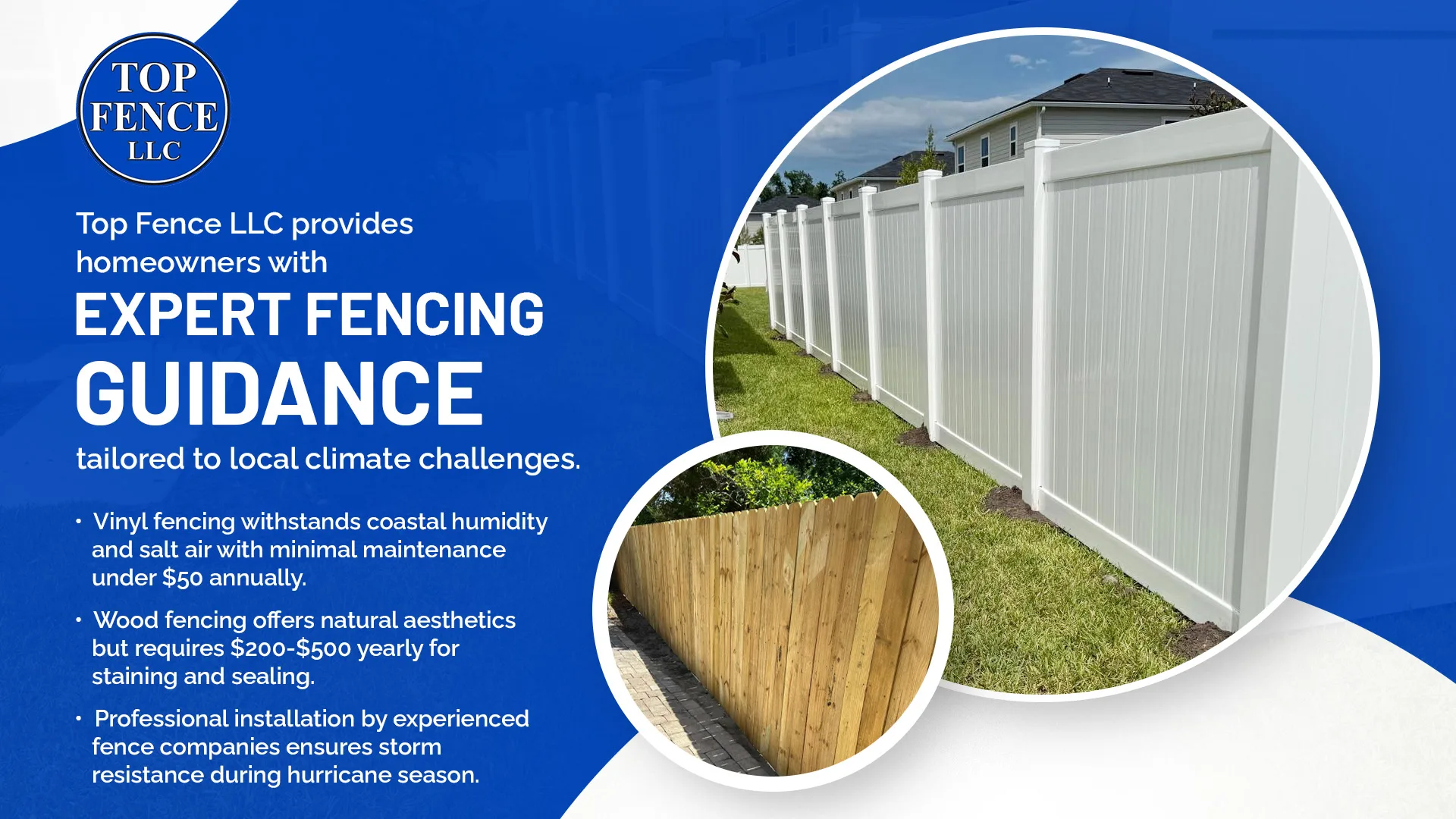
Jacksonville homeowners often compare vinyl and wood fencing when planning upgrades, and we know the right choice depends on how each material performs in Florida’s climate. As a fencing company in Jacksonville, we see daily how humidity, salt air, and storm seasons affect fence durability. As a residential fence company, we guide homeowners through the differences in lifespan, upkeep, and long-term value so they can decide whether vinyl or wood is the better fit for their property.
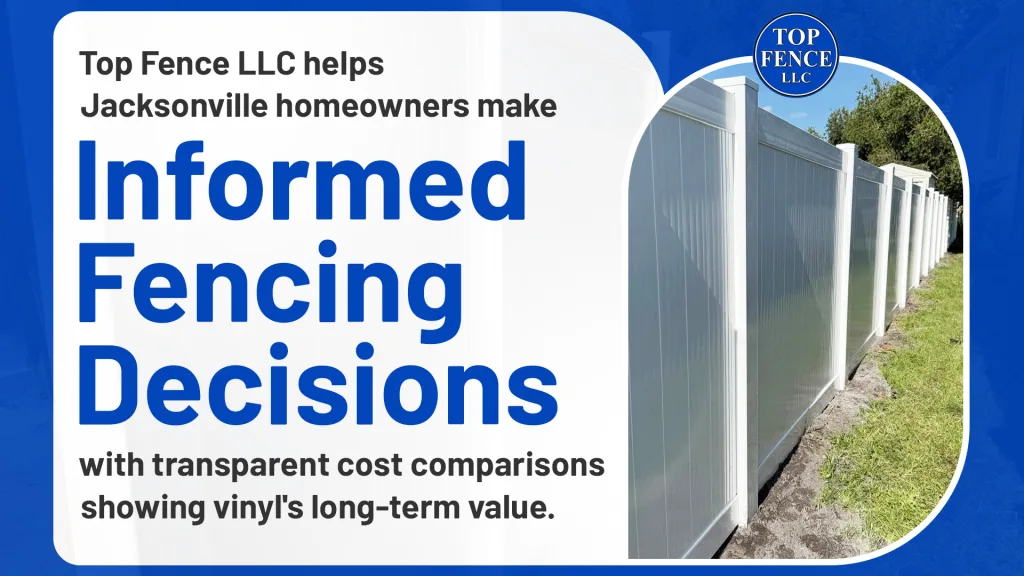
Vinyl fencing lasts 20-30 years and needs minimal upkeep, while wood fencing lasts 15-20 years but costs less initially. For Jacksonville homeowners, vinyl handles humidity and salt air better, but wood offers natural beauty at a lower price point. Your choice depends on your budget, maintenance preference, and how long you plan to stay in your home.
Both materials work well in Northeast Florida when installed correctly. Wood fences bring classic charm and flexibility in design. Vinyl fences resist rot and weather damage without regular staining or painting.
Vinyl fencing delivers superior longevity in Jacksonville's coastal environment. According to industry data, properly installed vinyl fences last 20-30 years, with some exceeding 50 years when well-maintained. The material resists moisture, insects, and rot without breaking down.
Wood fencing typically lasts 15-20 years in Jacksonville, based on fence lifespan research. Pressure-treated pine, the most common wood type, needs replacement sooner than premium options like cedar. Without regular maintenance, wood fences show signs of decay within 10 years.
The lifespan gap comes down to how each material handles moisture. Wood absorbs water, leading to swelling, warping, and eventual rot. Vinyl's non-porous surface keeps water out, preventing the moisture damage that shortens fence life in humid climates.
Jacksonville's weather creates specific challenges for fencing materials. The area experiences 75% average humidity year-round, with levels reaching 81% during the summer months. This constant moisture attacks wood fences relentlessly.
Vinyl fencing thrives in Jacksonville's humid subtropical climate. The material doesn't absorb moisture, so it won't rot, warp, or develop mold. Salt air from the Atlantic Ocean also has minimal impact on vinyl, making it perfect for coastal neighborhoods like Jacksonville Beach and Ponte Vedra.
Wood fencing faces an uphill battle against local weather conditions. Humidity causes wood to swell and contract continuously, weakening the structure over time. Rain accelerates rot, especially where fence posts meet the ground. Summer heat and intense UV rays fade and crack untreated wood surfaces.
Salt exposure near coastal areas corrodes metal fasteners in wood fences faster than in inland locations. Vinyl fences use corrosion-resistant hardware that stands up to salty conditions better.
Understanding the true cost means looking beyond installation prices. Wood fencing costs less upfront, while vinyl requires a larger initial investment but saves money over time.
| Cost Factor | Wood Fencing | Vinyl Fencing |
| Material Cost (per linear foot) | $15–$30 | $25–$40 |
| Installation Cost (100 ft) | $1,500–$3,000 | $2,500–$4,000 |
| Annual Maintenance | $200–$500 | $0–$50 |
| Lifespan | 15–20 years | 20–30+ years |
| Total 20-Year Cost | $5,500–$13,000 | $2,500–$5,000 |
Wood fence installation starts at lower prices because the material itself costs less.
Vinyl fencing carries higher upfront costs, typically ranging from $2,500 to $4,000 for a 100-foot installation. The premium materials and specialized installation techniques drive these prices higher.
Maintenance expenses tell a different story. Wood fences need staining or sealing every 2-3 years to prevent decay. These treatments require periodic professional service on a yearly basis. Vinyl maintenance involves only occasional washing with soap and water. Most homeowners spend very little time or resources each year on vinyl fence upkeep.
Wood fencing demands regular attention to maintain appearance and structural integrity. Wood fence owners need to stain or seal their fences every 2-3 years. This process protects against moisture penetration and UV damage. Homeowners also inspect regularly for loose boards, rusty nails, and signs of insect damage.
Vinyl fencing requires minimal ongoing care. Spray the fence with a garden hose to remove dirt and debris. For stubborn stains, use mild soap and water with a soft brush. This simple cleaning routine keeps vinyl fences looking fresh without special products or treatments.
No painting, staining, or sealing is needed for vinyl. The color runs throughout the material, so scratches don't reveal different colors underneath. UV inhibitors built into quality vinyl prevent fading and discoloration from sun exposure.
Jacksonville's constant moisture creates an environment where wood struggles and vinyl excels. High humidity levels penetrate deep into wood grain, causing expansion and contraction cycles that weaken the material.
When wood absorbs moisture from humid air, it swells. As the sun dries the wood, it shrinks back down. This constant movement loosens fasteners, creates gaps between boards, and eventually causes warping.
Mold and mildew grow rapidly on damp wood surfaces in humid conditions. These organisms don't just look unsightly - they actively decompose wood fibers, accelerating rot.
Vinyl's non-porous surface blocks moisture completely. Humidity levels don't affect the material's stability or appearance. Water can't penetrate vinyl to cause swelling, warping, or rot.
Termites and carpenter ants thrive in Jacksonville's warm, humid environment. These insects target moisture-damaged wood, creating colonies that destroy fence structures from the inside. Vinyl's synthetic composition offers zero nutritional value to wood-destroying insects.
Storm resistance depends on proper installation and material flexibility. Both wood and vinyl can withstand moderate hurricane winds when installed by experienced fence companies in Jacksonville.
Vinyl fencing bends under wind pressure without breaking. This flexibility allows the material to absorb impact from flying debris and return to its original shape. Quality vinyl installations include reinforced posts set in concrete to anchor the fence system.
Wood fencing takes a more rigid approach to wind resistance. Properly braced wood fences stand firm against moderate winds. However, extreme gusts can snap wooden boards or uproot entire sections.
Both fence types can increase property value when chosen appropriately for the home and neighborhood. The right choice depends on your specific situation and local market preferences.
Vinyl fencing appeals to buyers seeking low-maintenance homes. The long lifespan and minimal upkeep requirements make vinyl an attractive feature during home sales. Explore our vinyl fencing installations designed specifically for Jacksonville's climate.
Wood fencing attracts buyers who appreciate natural materials and traditional aesthetics. A well-maintained wood fence in a historic neighborhood or rural setting complements the property's character. Learn more about our wood fencing options to find the perfect style for your home.
Return on investment favors vinyl in Jacksonville's climate. Buyers recognize that vinyl fences won't need replacement or significant maintenance for decades. These future cost savings translate into a willingness to pay more for homes with vinyl fencing.
Start by evaluating your priorities. If minimizing long-term maintenance tops your list, vinyl fencing makes sense. Homeowners who enjoy weekend projects and prefer natural materials might choose wood despite the extra work.
Budget considerations extend beyond initial costs. Calculate total ownership expenses over 20 years, including maintenance, repairs, and potential replacement. This complete picture reveals vinyl's long-term value despite higher upfront prices.
Consider your proximity to the coast. Properties near Jacksonville Beach, Atlantic Beach, or Ponte Vedra face harsher salt air exposure. Vinyl's resistance to corrosion makes it the practical choice for coastal locations.
Professional installation determines how well your fence performs, regardless of material choice. Experienced fence companies in Jacksonville understand local soil conditions, weather patterns, and building codes. Our residential fencing services include professional guidance on material selection and professional installation techniques.
Quality installers set posts at proper depths with adequate concrete. This foundation keeps fences stable during storms and prevents settling over time. Proper spacing between boards allows for material expansion without buckling.
Get detailed quotes from multiple fence companies in Jacksonville before deciding. Compare not just prices but also materials, installation techniques, and warranty terms. The lowest bid doesn't always deliver the best long-term value.
Choosing between vinyl and wood fencing affects your property for decades. As a leading fence company, Top Fence LLC helps Jacksonville homeowners make informed decisions based on their specific needs and circumstances.
Our team brings years of experience installing both fence types throughout Northeast Florida. We understand how different materials perform in St Johns County, Jacksonville Beach, Palm Coast, Nocatee, Fruit Cove, and surrounding areas. This local knowledge makes sure that your fence stands strong against humidity, salt air, and storm conditions.
Since 2018, we've earned our reputation as an award-winning company by delivering quality installations backed by our satisfaction guarantee. Military families receive special discounts as our way of saying thank you for their service.
Call Top Fence LLC at (904) 999-9779 for your free consultation. We serve homeowners throughout Jacksonville, St Johns County, Jacksonville Beach, Palm Coast, and surrounding areas.
Our experienced team delivers professional fence installations that enhance your property's security, privacy, and curb appeal. Whether you choose vinyl or wood, we guarantee quality workmanship that stands the test of time in Northeast Florida's demanding climate.
Transform your outdoor space with a beautiful new fence. Contact us today to get started.


